
AI ML API
AI ML API
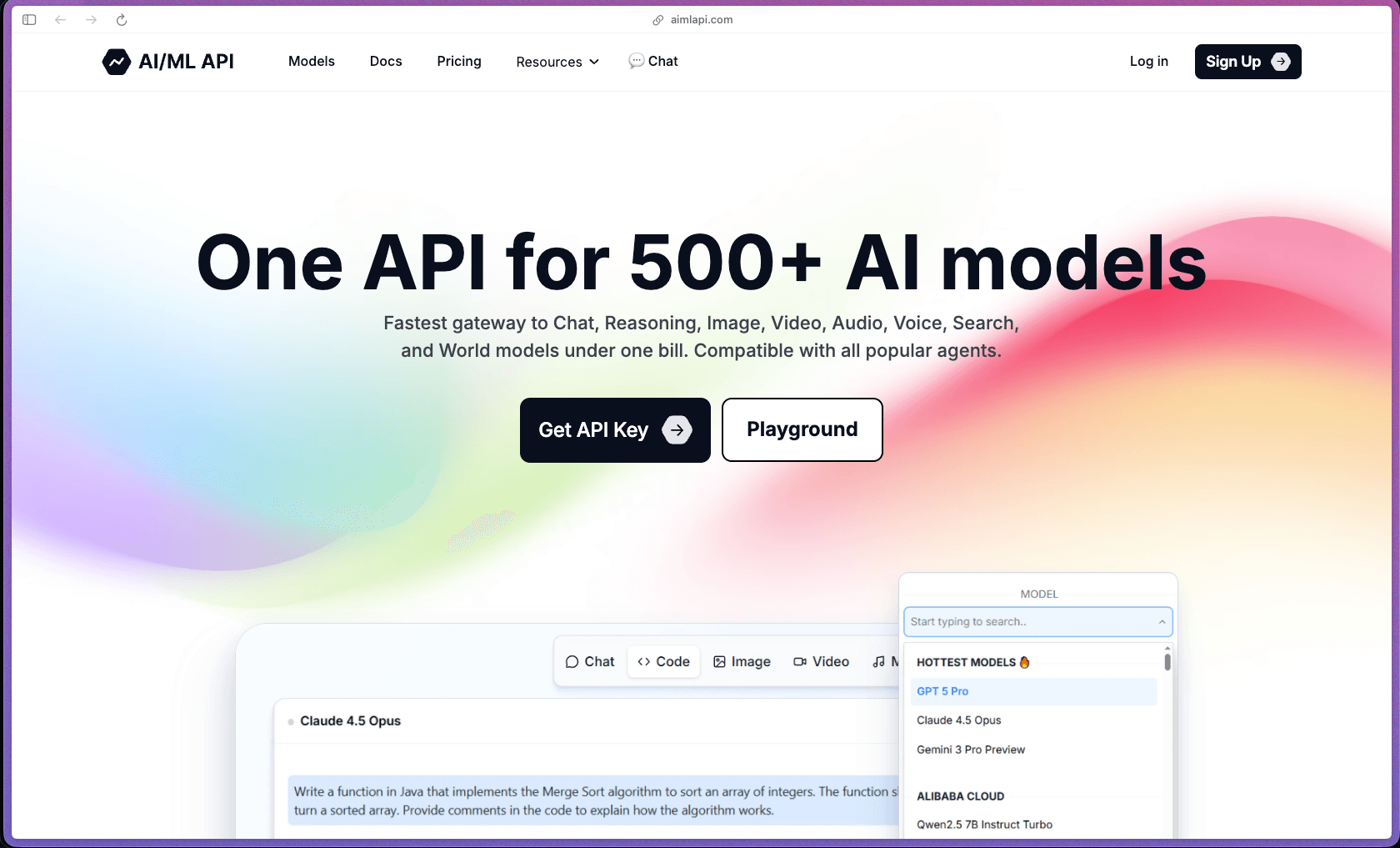
AI/ML API solves a real friction point for developers who need access to multiple AI providers—OpenAI, Anthropic, Google, Meta, DeepSeek, and others—without managing five separate API keys, billing accounts, and integration quirks. The OpenAI-compatible interface means existing OpenAI projects can be pointed at AI/ML API with a single endpoint change, making it a practical option for teams that want model flexibility without a full codebase rewrite. The pay-as-you-go model is well-suited to variable usage patterns common in early-stage product development and prototyping.
AI/ML API operates on a pay-as-you-go model with no recurring subscription fees—new users add funds to their balance and are billed per API call based on model-specific per-token or per-generation rates. There is no permanently free plan, but the pay-as-you-go structure means you only pay for actual usage and there is no minimum commitment.
Refund policy is not specified in detail on the official site; billing disputes are handled through direct contact with support at help@aimlapi.com, and the pay-as-you-go model means unused balance is not automatically refunded. There is no formal money-back guarantee period noted on the official product or help pages.
AI/ML API appears to be in the "growing/stable" category—it was publicly listed on Product Hunt and AI directories from early-to-mid 2024, suggesting a relatively recent launch of its current unified API platform form. The platform has expanded its model catalog significantly from around 100 models at launch to 500+ as of mid-2026, and has published structured developer documentation, a help center, and integration guides for third-party frameworks. Review volume across public platforms remains modest (under 50 combined reviews across G2, Product Hunt, and Trustpilot), which is consistent with a product that is still building awareness and community rather than one with an established user base at scale.
- Rated 4.0 out of 5 on Product Hunt based on 14 community reviews, with reviewers generally citing ease of integration and broad model access as the main strengths.
- Rated 3.9 out of 5 on Trustpilot from a small number of reviews, with the platform responding to 100% of negative reviews—a positive signal for support responsiveness.
- Listed on G2 with 11 verified reviews; the platform is early-stage in terms of review volume on major review aggregators.
- The GitHub organization (github.com/aimlapi) hosts the official API documentation repository and is publicly accessible, with integration guides referenced by third-party agent frameworks including Agno.
- Mixed but largely favorable developer feedback highlights reliable performance for prototyping use cases and straightforward OpenAI migration; a minority of users have reported billing clarity issues, which the support team has publicly acknowledged and responded to.
- A single API endpoint gives you access to 500+ AI models from providers including OpenAI, Anthropic, Google, Meta (Llama), DeepSeek, ByteDance, ElevenLabs, Kling AI, MiniMax, Alibaba Cloud, and Stability AI—without needing a separate account or integration for each provider.
- Text and chat models cover a broad range of use cases—from GPT-4o and Claude 3.5 Sonnet for conversational AI to DeepSeek Reasoner for complex analytical and coding tasks—all accessible through the same endpoint and authentication key.
- Image generation models include Stable Diffusion variants and other popular generation models, allowing developers to add image creation to applications without a separate provider integration.
- Video generation models (including Kling AI and Wan 2.6 image-to-video) are accessible through the same unified endpoint, covering a modality that requires separate accounts and integrations on most competing platforms.
- Audio models support both speech-to-text transcription and text-to-speech generation, with ElevenLabs models available through the unified API alongside other audio providers.
- Embedding models are available for applications that require vector representations of text for search, retrieval-augmented generation (RAG), or semantic similarity tasks.
- A web-based playground at aimlapi.com/app lets developers test models and inspect responses interactively before writing any integration code.
- API key management is handled through a dashboard, allowing developers to create, monitor, and revoke API keys from a single web interface.
- The API is OpenAI-compatible, meaning any application currently using the OpenAI SDK can be redirected to AI/ML API by changing the base URL and API key—no other code changes required for most use cases.
- Native integration documentation is published for third-party agent frameworks including Agno, and the help center lists additional supported third-party tool integrations for routing API traffic through AI/ML API.
- Streaming mode is supported, allowing token-by-token output for chat applications that need to display responses progressively rather than waiting for the full completion.
- Function Calling is supported on compatible models, allowing applications to use structured tool-calling workflows where the AI model can invoke defined functions or external APIs as part of a reasoning step.
- Batch processing is supported for applicable models, letting developers submit multiple independent requests in a single call to reduce round-trip overhead in high-volume pipelines.
- Vision (image input) capabilities are available on supported models, enabling applications that need to analyze or describe images alongside text instructions.
- Streaming mode enables real-time output pipelines where partial model responses are delivered incrementally—useful for building interactive AI interfaces, code assistants, and live-typing chat experiences without waiting for full response completion.
- Batch processing support allows developers to execute multiple independent inference requests in a single API call, reducing total latency and API overhead in automated content generation or data processing pipelines.
- The dashboard includes usage tracking that shows API call counts and token expenditure per API key, allowing developers to monitor spending and identify which integrations are consuming the most resources.
- Per-model pricing is documented on the pricing calculator page with a model-by-model breakdown of billing method (per token vs. per generation), allowing developers to estimate costs before deploying a specific model at scale.
- Developers can select from 500+ models for any given API call, allowing applications to use different models for different tasks—for example, a fast lightweight model for high-frequency queries and a larger reasoning model for complex tasks—all within the same integration.
- The API supports web search capabilities on compatible models, allowing AI responses to incorporate real-time external information without a separate search integration.
- API key authentication uses a standard Bearer token header (Authorization: Bearer YOUR_AIMLAPI_KEY), consistent with OpenAI-compatible security patterns that developers are already familiar with.
- The dashboard provides API key management with the ability to create and revoke keys, giving development teams control over which integrations have active access to the account.
- Usage monitoring via the dashboard allows developers to track consumption patterns and spot anomalous usage that could indicate key exposure or unexpected cost spikes.
- Solo developers or indie hackers building AI-powered SaaS products who need access to multiple foundation models (OpenAI, Anthropic, Gemini, Llama) without managing separate accounts, billing, and API integrations for each.
- Early-stage startups that built their initial product on the OpenAI API and want to add model flexibility or reduce costs by routing some requests to open-source or lower-cost models without rewriting their integration layer.
- Technical founders prototyping AI features across text, image, audio, and video modalities who want to evaluate multiple models quickly from a single interface before committing to a production stack.
- Development teams building internal tools or automation pipelines who need access to embedding models for RAG (retrieval-augmented generation) alongside LLMs for generation—both available through the same endpoint.
- Small product teams who want to build multi-modal AI features (text + image + voice) into a single application without dealing with the integration complexity of three separate provider relationships.
- Use it for building a multi-model AI chatbot when you want the ability to route different types of user queries to different foundation models (e.g., GPT-4o for general use, DeepSeek for coding tasks) through a single integration.
- Use it for adding image or video generation to a SaaS product when you need to offer AI-generated visual content without signing up for a separate Stability AI or Kling AI account and integrating a second API.
- Use it for prototyping and comparing AI models when you're evaluating which LLM gives the best output for your specific use case and want to test OpenAI, Anthropic, and open-source models side by side from one endpoint.
- Use it for building voice-enabled applications when you need both speech-to-text transcription and text-to-speech synthesis in a single product, without managing separate integrations for ElevenLabs or Whisper.
- Use it for constructing RAG pipelines when your application needs text embeddings for vector search alongside a generation model for final response synthesis, and you want both accessible through the same API key and billing account.
- Use it for migrating existing OpenAI-based projects to a multi-provider setup when you want to reduce dependency on a single provider or test cost-performance trade-offs with a minimal code change.
- Cloud-hosted, managed API service—no server deployment required; access is via HTTPS API calls from any language or framework that supports HTTP requests.
- OpenAI SDK-compatible: works with the official OpenAI Python and Node.js SDKs by replacing the base URL with the AI/ML API endpoint—no separate SDK installation required.
- Supports REST API calls with JSON request and response bodies using standard API key (Bearer token) authentication.
- Integration documentation is available for third-party agent frameworks (Agno confirmed); the help center lists additional supported tools.
- The model catalog includes text/LLM, image generation, video generation, audio (speech-to-text and text-to-speech), embeddings, and vision models—accessible under the same authentication key.
- No self-hosted deployment option is described on the official site; the platform is SaaS-only with access via the managed cloud endpoint.
AI/ML API occupies the same space as API aggregators like OpenRouter and Together AI—platforms that provide a single endpoint for accessing multiple AI model providers—distinguishing itself through a wide model catalog (500+) that spans text, image, video, and audio modalities in a single integration, which is broader than many single-modality competitors. The OpenAI compatibility layer is the primary practical differentiator for teams already using OpenAI: switching takes a one-line code change rather than an integration rebuild, making it a lower-effort way to gain model optionality. Pricing is usage-based and pay-as-you-go, which suits variable-load applications and prototyping better than subscription tiers that charge a fixed monthly fee regardless of actual usage.
- Support is available via email at help@aimlapi.com and through the help center at help.aimlapi.com; the team has a documented track record of responding to public negative reviews on Trustpilot (100% response rate noted), which is a positive signal for support responsiveness at the current scale.
- Developer documentation is available at docs.aimlapi.com and covers quickstart guides, model references, capability-specific guides (streaming, batch, embeddings, function calling), and per-provider model pages; documentation quality is cited positively in multiple independent developer reviews.
- Community support infrastructure appears limited to email/help desk at this stage—there is no publicly visible Discord, Slack community, or forum beyond the help center; teams requiring peer community support would need to rely on third-party developer communities.
- The pay-as-you-go billing model has generated some user complaints about billing transparency—a minority of Trustpilot and Product Hunt reviewers reported unexpected charges or unclear cost calculations for specific model calls, so teams should monitor usage carefully via the dashboard, especially during early integration testing.
- There is no permanently free plan—new users must add funds before making API calls beyond any evaluation access; this is a higher barrier to initial testing compared to platforms that offer free monthly credit tiers.
- Community and ecosystem size is still small compared to mature API gateway providers, which means third-party tutorials, community troubleshooting threads, and pre-built framework integrations are more limited.
- Model availability and stability for specific non-OpenAI models may vary; some Product Hunt reviewers reported specific models being unavailable or returning frequent errors, which is worth validating for any model your production application depends on.
Related Products
Recently Added!
Webflow
Recently Added!
Sniply

Recently Added!
Nero

Recently Added!
miniOrange

Format

Recently Added!
DigitalOcean
Base44

Products With Lifetime Deals
Recently Added!
FluentForms
Recently Added!
Divi Theme
Recently Added!
ConvertPro
Recently Added!
CartFlows
Recently Added!
Bullet Proof Security
Recently Added!
WP Booking Calendar
Recently Added!
BeaverBuilder
Recently Added!
Avada
Recently Added!
Independent Analytics
You Recently Viewed These
Recently Viewed
BitFlows

Recently Viewed
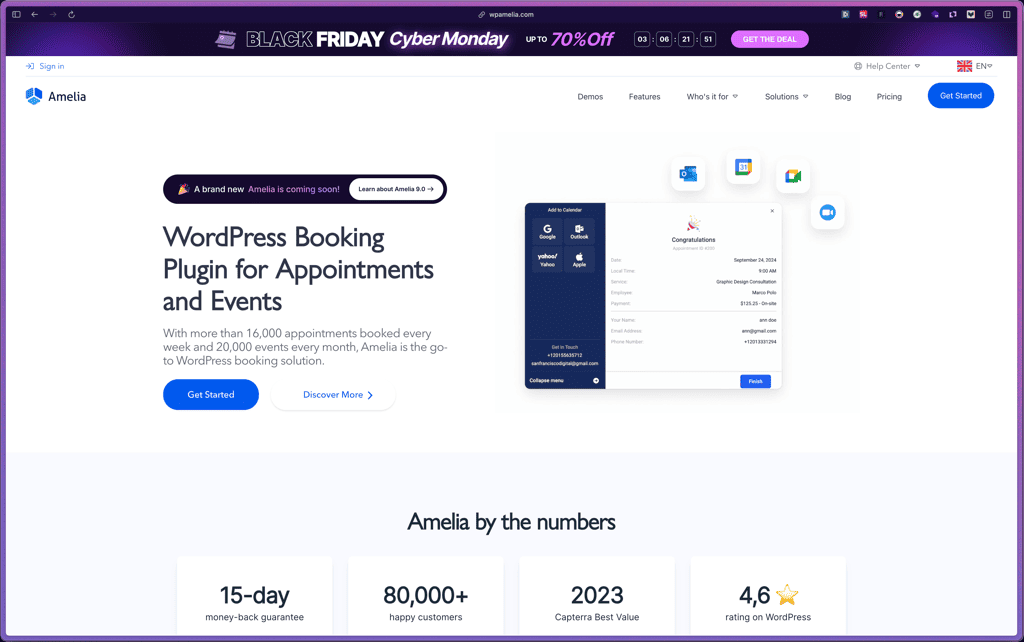
Amelia
Recently Viewed
Dynamic.ooo

Recently Viewed
Microthemer & Amender

Recently Viewed
LifterLMS

Recently Viewed
Masteriyo

Recently Viewed
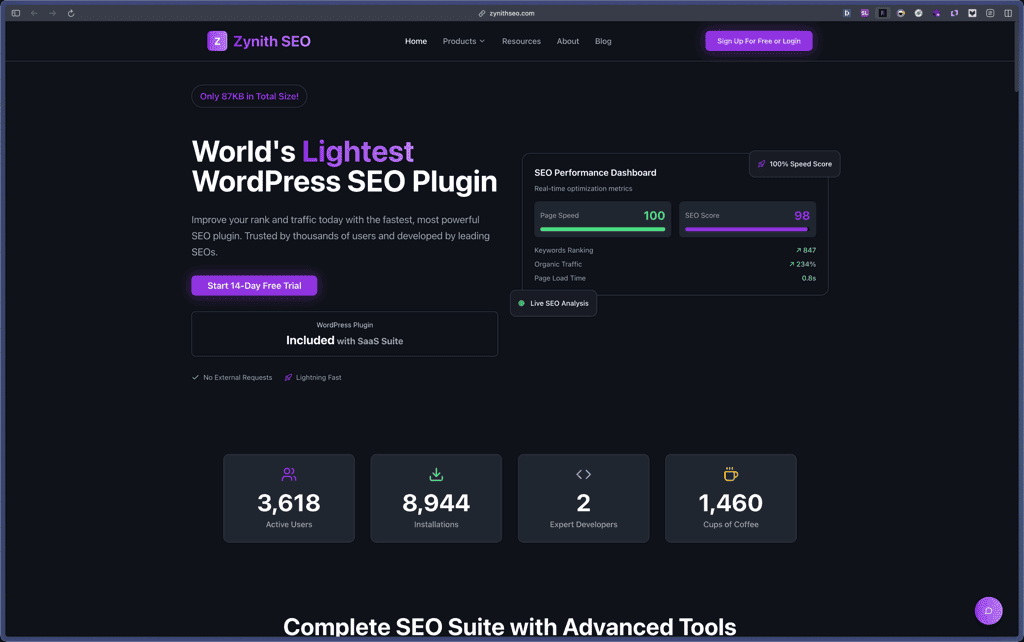
Zynith SEO
Recently Viewed
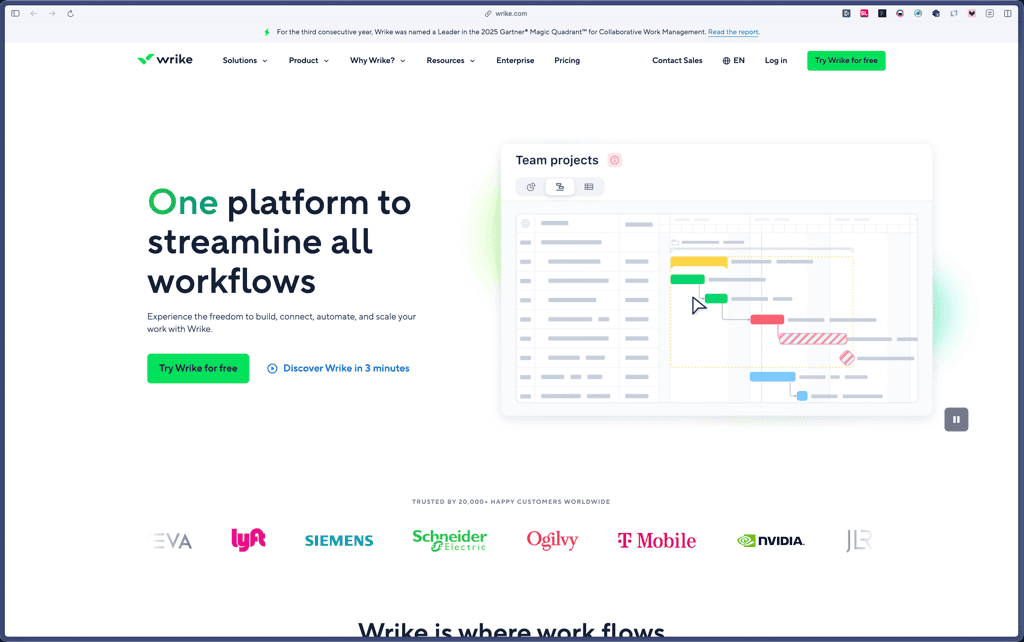
Wrike
Recently Viewed
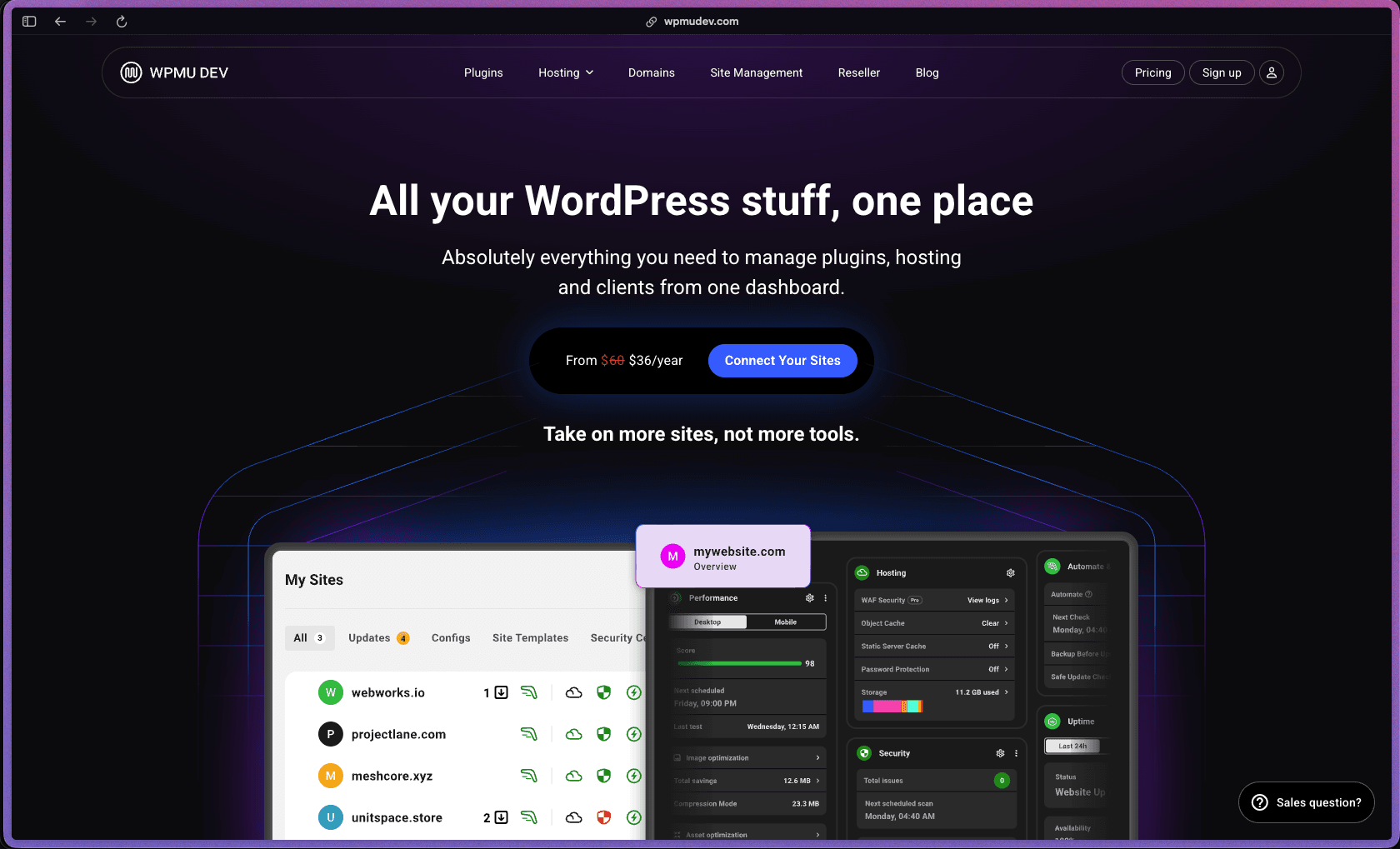
WPMU Dev
Recently Viewed
wpDataTables
Recently Viewed
WP Booking Calendar
Recently Viewed
Webflow