FullStro
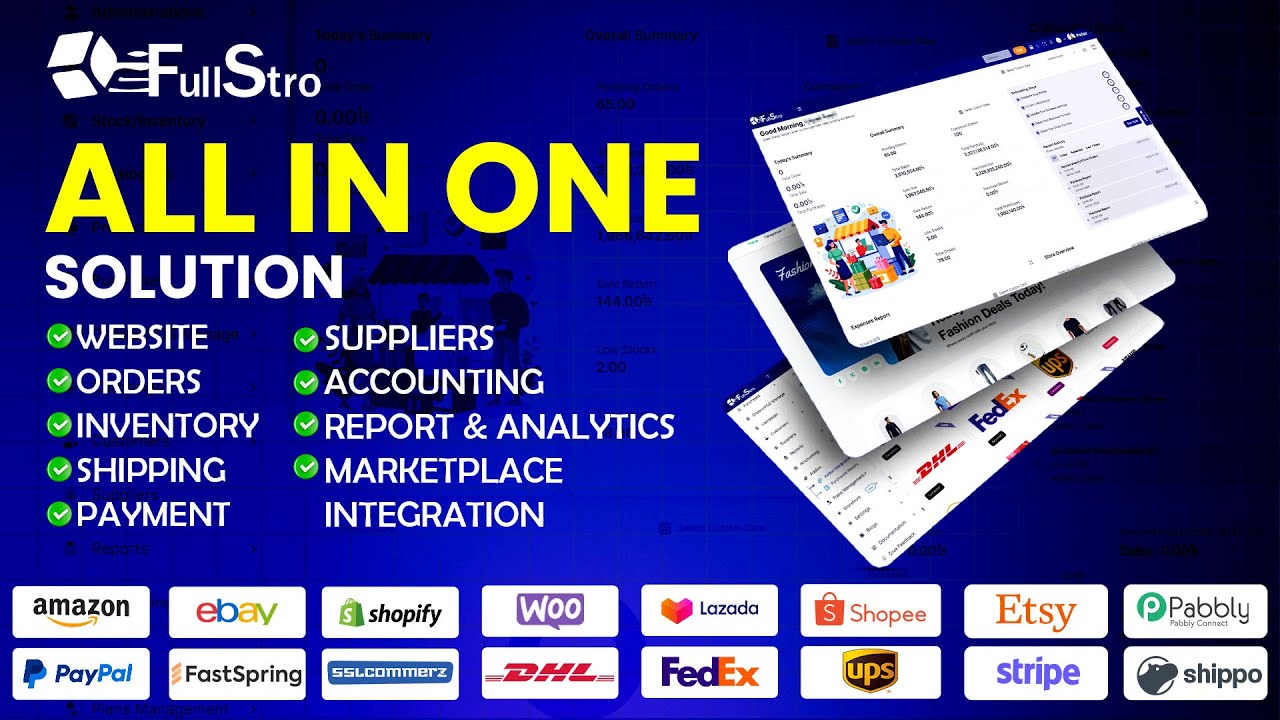

FullStro pulls together website/storefront, inventory, orders, shipping, suppliers, accounting, and payments into one system built specifically for ecommerce, which can meaningfully cut down on manual work and tool sprawl for founders. The Black Friday LTD structure gives teams predictable, one‑time pricing with clear limits on orders, users, warehouses, and integrations at each tier. Strong marketplace and shipping integrations plus features like POS, invoicing, and customer management make it a practical fit for multi‑store operators rather than a niche add‑on.
FullStro offers lifetime deal (one‑time payment) plans for Growth, Power, and Empire tiers during its Black Friday / Cyber Monday promotion, each with different usage limits and user counts. Outside of the LTD offer, the main site also references subscription-style “Free Forever” and paid plans, but the ToolSalsa deal is clearly framed as LTD licenses.
FullStro’s LTD offer includes a 30‑day refund window with a stated 100% money‑back policy if you are not satisfied and contact them within 30 days of purchase.
FullStro appears as an established product with public listings on platforms like AppSumo, SoftwareSuggest, and G2, and reviews dating back at least to 2023. The presence of detailed docs (for example, a Shopify integration guide), an updated main site focused on multi‑channel automation, and a 2.0 release mentioned on social channels suggest a growing/stable tool that is actively developed rather than a brand‑new experiment.
- Featured on AppSumo as an end‑to‑end fulfillment and inventory management solution for ecommerce sellers.
- Listed on G2 as a platform that solves multi‑platform inventory management for online merchants.
- The Black Friday page highlights multiple customer testimonials describing it as a “one stop” inventory and fulfillment tool with strong support and fast sync.
- The main site and marketing mention usage across multiple Shopify stores and other channels, indicating adoption by multi‑store brands.
- Centralized inventory management keeps product quantities, SKUs, and variants in sync across multiple sales channels and warehouses, helping reduce stockouts and overselling.
- Order, sales, and invoice management lets you process a defined number of orders per plan (from hundreds to tens of thousands), create invoices, and handle returns from a single dashboard.
- Built‑in POS and barcode support let you manage in‑person or phone orders while keeping stock aligned with your online channels.
- Website/storefront features provide an ecommerce site layer so you can run a brand store alongside marketplace channels.
- Customer management surfaces customer data, purchase history, and segmentation in one place, which is useful for repeat sales and support.
- Accounting and expense tracking tools generate invoices, track expenses, and support basic bookkeeping inside the same system.
- Native integrations with major ecommerce platforms like Shopify, WooCommerce, Amazon, eBay, Lazada, and Shopee let you manage multiple stores from one FullStro account.
- Shipping integrations with popular couriers allow you to book shipments, generate labels, and track parcels from a unified shipping dashboard.
- Payment gateway integrations (e.g., Stripe and others listed in marketing) support online payments while keeping order and finance data tied back to inventory.
- Add‑on integrations by plan (2, 3, or 5) give you room to connect additional services as your operations become more complex.
- Automated order processing routes orders from connected channels into FullStro, updates stock, and synchronizes status with minimal manual input.
- Inventory sync runs in near real time so updates in one store reflect across others, which is especially valuable for multi‑channel sellers.
- Automated purchasing and procurement workflows (such as reordering when stock falls below thresholds) reduce manual buying tasks and help prevent stockouts.
- Email and SMS notifications, powered by SMTP configuration and SMS gateway settings, keep teams and customers informed of key events like orders and shipping updates.
- Reporting and analytics provide real‑time data on sales, orders, inventory levels, and trends, enabling faster, fact‑based decisions.
- Dashboards for top products, stock status, and purchasing overviews help you spot fast movers, low‑stock items, and opportunities to optimize purchasing.
- User access roles let you control permissions for different team members, which is important when you have separate warehouse, finance, and support staff.
- White‑label options on the Empire plan let agencies or aggregators run the platform under their own brand, making it easier to present FullStro as a branded backend to clients.
- Customizable dashboards and views in the main app let you focus on the metrics and lists that matter most to your business.
- User accounts, roles, and multi‑warehouse controls provide a basic security and access control layer around critical inventory and financial data.
- The platform is described as cloud‑based and accessible from any device, which implies vendor‑managed infrastructure and updates rather than self‑hosted maintenance overhead.
- Founders running several Shopify or WooCommerce stores who want one system to manage inventory, orders, and fulfillment instead of relying on spreadsheets and manual updates.
- Ecommerce brands selling on marketplaces like Amazon, eBay, Lazada, or Shopee that need multi‑channel inventory sync and centralized order management.
- Small to mid‑sized teams looking for a warehouse and stock management tool with built‑in shipping, invoicing, and customer management.
- Agencies or aggregators managing inventory and fulfillment for multiple client stores who can benefit from white‑label capabilities on higher tiers.
- Brick‑and‑click retailers who need POS, barcode support, and online marketplace sync to keep physical and online inventory aligned.
- Use it for centralizing inventory across Shopify, WooCommerce, and marketplaces when you want one source of truth for stock and product data.
- Use it for automating multi‑channel order fulfillment when you need orders from all platforms to flow into a single system with consistent picking, packing, and shipping workflows.
- Use it for managing multiple warehouses when you must allocate stock, route orders, and track transfers across locations.
- Use it for generating invoices and running POS when you sell both online and offline and want synced sales and accounting data.
- Use it for supplier management and procurement when you want to raise purchase orders automatically as stock dips below defined thresholds.
- FullStro is a cloud‑hosted SaaS web application accessed via browser, so there is no local installation required.
- It integrates natively with major ecommerce platforms (Shopify, WooCommerce, Amazon, eBay, Lazada, Shopee) for product, order, and inventory sync.
- It connects with payment gateways and shipping/courier services, enabling label creation, payment processing, and tracking from within the app.
- POS and barcode features imply compatibility with common barcode scanners and standard retail workflows, though specific hardware requirements are not specified.
- Documentation includes at least one dedicated Shopify integration guide showing API‑based connection steps, which suggests similar approaches for other platforms.
Unlike simple stock trackers or single‑platform plugins, FullStro is designed as a full ecommerce operations layer that spans inventory, orders, warehouses, shipping, and accounting across many channels. Compared with pure marketplaces or point solutions, it aims to be the central control panel for founders who sell in multiple places and want automation around fulfillment and procurement rather than just reporting. The LTD plan structure during BFCM makes it attractive if you prefer one‑time payment over ongoing per‑order or per‑store fees.
- The LTD page highlights 24/7 support via live chat and ticket across all three lifetime plans.
- The main site includes documentation and how‑to guides, including a Shopify integration guide, which suggests a basic knowledge base is available.
- Public presence on platforms like AppSumo and G2, plus social posts about new versions, indicates an active team responding to users and evolving the product.
- Each LTD plan caps orders/sales/invoices per month (e.g., from 500 to 10,000), so very high‑volume merchants may outgrow specific tiers.
- The number of team members, warehouses, and add‑on integrations is limited by plan, which can constrain larger or more complex setups unless you choose a higher tier.
- Promotional messaging features are not available on the Empire plan according to the comparison table, which may matter if you rely on structured promotional messages from within the system.
- No explicit mention is made of native mobile apps, suggesting primary use is via web browser.
Related Products
Deel
Cello
Butter
Brevo
Wrike
TimeDoctor

Retable

RingCentral

Pabbly Connect

Products With Lifetime Deals
Support Candy

New!
Bit Integrations

Amelia
Bricks Builder
BitFlows

Crocoblock

You Recently Viewed These
Recently Viewed
Deel
Recently Viewed
Craft
Recently Viewed
Cello
Recently Viewed
Butter
Recently Viewed
Bricks Builder
Recently Viewed
Brevo
Recently Viewed
Umso - Website Builder
Recently Viewed
Amelia
Recently Viewed
Zynith SEO
Recently Viewed
Wrike
Recently Viewed
wpDataTables
Recently Viewed
Webflow